Unit 3: Fiscal Policy
Fiscal Policy: changes in the expenditures or tax revenues of the federal government.
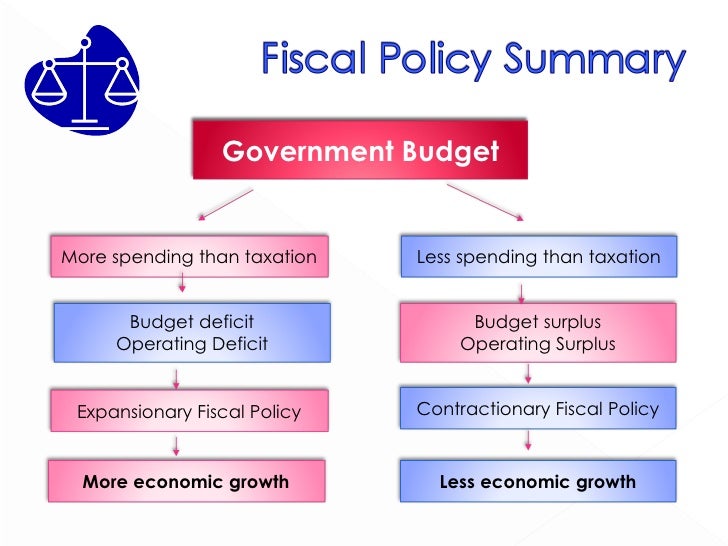
Contractionary Fiscal Policy: policy designed to decrease AD
Two Tools of Fiscal Policy
- Taxes - government can either increase or decrease
- Spending - government can increase or decrease
- If the government increases taxes, they must decrease spending. If the government increases spending, they must decrease taxes.
Fiscal policy is enacted to promote our national economic goals: full employment, price stability, economic growth
Deficits, Surpluses, and Debt
- Balanced budget: revenues = expenditures
- Budget deficit: revenues < expenditures
- Budget surplus: revenues > expenditures
- Government debt: sum of all deficits - sum of all surpluses
Government must borrow money when it runs into a budget deficit
- Individuals
- Corporations
- Financial institutions
- Foreign entities or foreign governments
Two Options for Fiscal Policy
Discretionary Fiscal Policy
- Expansionary Fiscal Policy - think deficit
- Contractionary Fiscal Policy - think surplus
Non-Discretionary Fiscal Policy
Discretionary vs. Automatic Fiscal Policies
- Discretionary: increasing or decreasing government spending and/or taxes in order to return the economy to full employment. Discretionary policy involves policymakers doing fiscal policy in response to an economic problem
- Automatic: unemployment compensation and marginal tax rates are examples of automatic policies that help mitigate the effects of recession and inflation. Automatic fiscal policy takes place without policymakers having to respond to current economic problems.
Contractionary Fiscal Policy: policy designed to decrease AD
- strategy for controlling inflation
- inflation is countered with contradictory policy
- decrease government spending, increase taxes
Expansionary Fiscal Policy: designed to increase AD
- strategy for increasing GDP, combating recession, and reducing unemployment
- recession is countered with expansionary policy
Automatic or Built-in Stabilizers
- Anything that increases the government's budget deficit during a recession and increases its budget surplus during inflation without requiring explicit action by policymakers.
6 Transfer Payments:
- welfare checks
- food stamps
- unemployment checks
- corporate dividends
- social security
- veteran benefits.
Progressive Tax System
- Average tax rate (tax revenue/GDP) rises with GDP
Proportional Tax System
- Average tax rate remains constant as GDP changes
Regressive Tax System
- Average tax rate falls with GDP


Comments
Post a Comment